
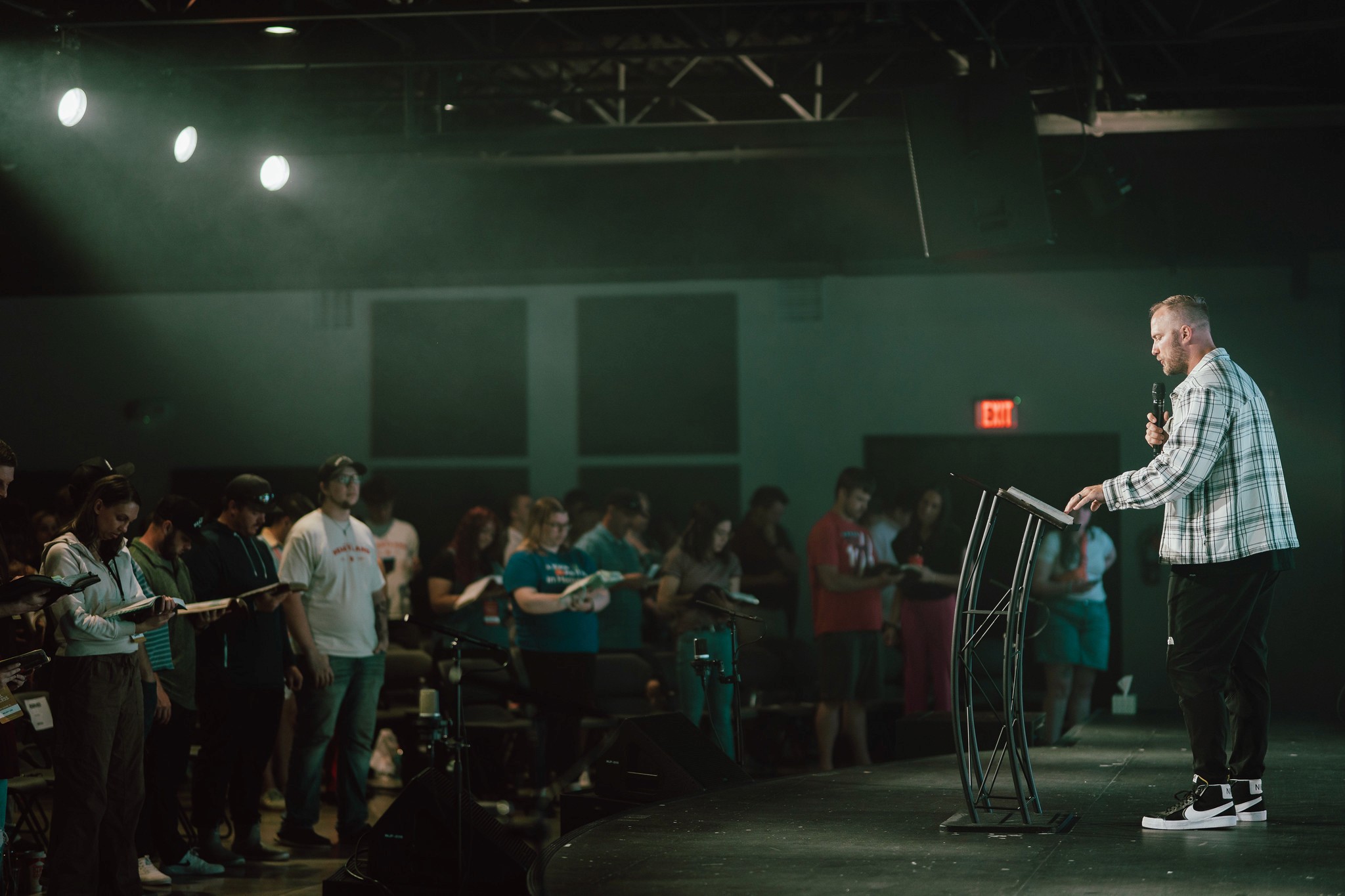
When Spiritual Gifts Feel Awkward: Understanding Tongues and the Power of the Holy Spirit
Church can feel strange sometimes. People raise their hands during worship, speak words they believe are from God, pray in languages they never learned, and embrace strangers like family. If you've ever sat in a service thinking, "Why do we do that?"—you're not alone.
The truth is, awkward doesn't always mean wrong. Sometimes awkward just means unfamiliar. And when it comes to the gifts of the Holy Spirit—particularly speaking in tongues—many believers find themselves caught between confusion, skepticism, and curiosity.
The Corinthian Confusion
The early church in Corinth faced similar tensions. They were a highly spiritual community, filled with genuine gifts of the Spirit, yet remarkably immature in how they used them. The Apostle Paul didn't respond to their disorder by shutting everything down. He didn't tell them to stop operating in spiritual gifts because things got messy. Instead, he wrote, "Now about the gifts of the Spirit, brothers and sisters, I do not want you to be uninformed" (1 Corinthians 12:1).
Paul's approach is instructive: the answer to spiritual immaturity isn't silence or avoidance—it's education, correction, and growth toward maturity.
The Both/And Church
In 1 Corinthians 14, Paul gives two clear commands: "Follow the way of love and eagerly desire gifts of the Spirit" (verse 1). Notice he doesn't say to choose one or the other. We're not called to pick between the fruit of the Spirit and the gifts of the Spirit. We're called to carry both.
Some churches have emphasized gifts without love, creating environments where spiritual experiences become status symbols. Others have emphasized love while avoiding gifts altogether, creating powerless communities that look more like social clubs than Spirit-filled assemblies. Scripture calls us to something better—a both/and approach where love and power coexist.
Why Tongues Feels So Strange
Speaking in tongues might be the most misunderstood gift in the modern church. For some, it's been weaponized as proof of salvation or spiritual superiority. For others, it's been dismissed as emotionalism or relegated to the category of "too weird to consider."
But here's the reality: everything about Christianity sounds strange to our culture. We gather weekly to sing loudly to a God we can't see. We read an ancient book we believe speaks to us today. We eat bread and drink juice as symbols of divine presence. We believe a man claimed to be God, died, and came back to life. None of that is "normal" by cultural standards.
Yet many Christians will accept all of that but draw the line at tongues. Why? Often because we've allowed our culture to teach us that if we can't measure, explain, or rationalize something, we should be skeptical of it.
What Scripture Actually Says
Paul makes it clear: "For anyone who speaks in a tongue does not speak to people but to God. Indeed, no one understands them; they utter mysteries by the Spirit" (1 Corinthians 14:2).
This is fundamentally different from what happened at Pentecost in Acts 2, where people spoke in known human languages they had never learned. That was an outward, evangelistic moment—God strategically using recognizable languages to launch the gospel globally on a day when Jerusalem was packed with visitors from every nation.
But in 1 Corinthians 14, Paul describes tongues functioning differently—as a personal prayer language, a way of speaking mysteries to God that builds up the believer's inner life. He even mentions "tongues of men or of angels" (1 Corinthians 13:1), indicating that not all spiritual languages are human ones.
This isn't contradiction; it's category. God can use tongues in multiple ways, but the primary purpose Paul describes is personal edification—strengthening your spirit through prayer and praise directed toward God.
The Purpose: Building Yourself Up
Paul writes, "I thank God that I speak in tongues more than all of you" (1 Corinthians 14:18). This wasn't a boast—it was a testimony. Paul understood that praying in the Spirit strengthens the inner person. Jude echoes this: "Build yourselves up in your most holy faith and pray in the Holy Spirit" (Jude 20).
Think of it like spiritual exercise. You need to be built up before you preach, serve, work, have hard conversations, or face challenges. Praying in tongues is one way the Holy Spirit strengthens you from the inside out.
When Paul says, "If I pray in a tongue, my spirit prays, but my mind is unfruitful" (1 Corinthians 14:14), he's acknowledging that this gift bypasses our understanding. And that's precisely where many of us struggle. We don't like what we can't control or comprehend. But if you only obey God when everything makes sense, you'll never grow beyond your current level of understanding.
Maturity Means Order
Paul's concern wasn't that the Corinthians were using spiritual gifts—it was that they were using them immaturely. They were speaking in tongues publicly without interpretation, treating corporate worship like a private prayer closet, and creating confusion for outsiders.
His correction is clear: "Everything should be done in a fitting and orderly way" (1 Corinthians 14:40). Maturity means exercising self-control. If you're praying quietly to God in worship, that's between you and Him. But if you're addressing the whole congregation in a language no one understands, interpretation is needed.
The spirits of prophets are subject to the control of prophets. God doesn't give you a gift and then override your will. You steward it with wisdom and love.
The Invitation
Perhaps the most striking thing about Paul's teaching is his command: "Do not forbid speaking in tongues" (1 Corinthians 14:39). He doesn't say, "Be cautiously open if you feel comfortable." He says eagerly desire spiritual gifts.
The cure for the abuse of a gift isn't disuse—it's right use. We don't stop serving because some people serve with wrong motives. We don't stop teaching because false teachers exist. We learn to operate in maturity, love, and order.
If you've never experienced this gift, don't let past misuse or cultural skepticism keep you from asking. The same Holy Spirit who empowered the early church is available to believers today. Not as a badge of honor or proof of spirituality, but as a tool for building yourself up so you can better serve others.
The goal isn't to be weird for weird's sake. The goal is to be biblical, Spirit-filled, loving, and mature—carrying both the fruit and the gifts, walking in both power and humility, and creating space for God to work in ways that might not always make sense to our minds but deeply strengthen our spirits.


